
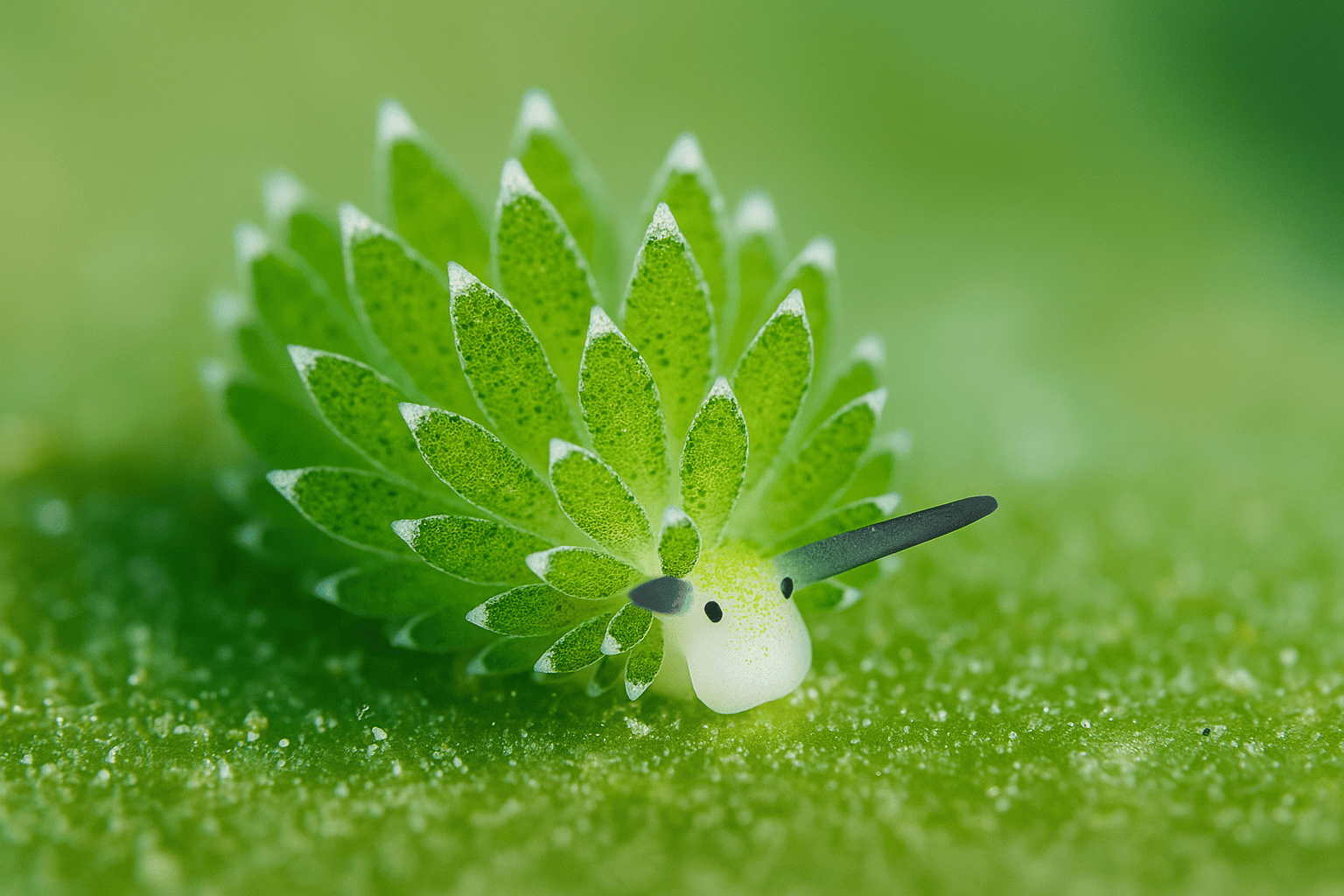
If there were ever a sea creature that looks straight out of a fantasy illustration, the Leaf Sheep would be it. With its bright green coloring, leaf-like “fluffy” appearance, and tiny black eyes that resemble cartoon characters, this tiny slug has captured the fascination of marine enthusiasts around the world. Known scientifically as Costasiella kuroshimae, the Leaf Sheep is a small but remarkable creature that uses sunlight in a way most sea animals cannot. This article explores what makes the Leaf Sheep so extraordinary, why it’s often called the ocean’s cutest herbivore, and why its unique biology continues to amaze scientists and animal lovers alike.
What Makes the Leaf Sheep So Unique
The leaf sheep sea slug is tiny—usually less than an inch long—but its biology is surprisingly advanced. One of the most incredible facts about this species is its ability to perform kleptoplasty, a process where it steals chloroplasts from algae and uses them to photosynthesize. This rare ability gives the leaf sheep slug its bright green coloration and allows it to generate energy from sunlight, much like a plant. Because of this trait, people often refer to it as a “solar-powered sea slug.”
The leaf-like appearance of the sea sheep slug comes from dozens of cerata—small leaf-shaped structures that cover its back. These structures store the chloroplasts the slug absorbs from algae and help it maximize sunlight exposure. This camouflage not only helps the slug blend into its environment but also provides an efficient surface for photosynthesis.
For comparison, some other sea species have unusual adaptations as well. The leatherback sea turtle, for example, has a flexible, leathery shell instead of a hard one, allowing it to dive deeper than any other turtle species. Like the Leaf Sheep, the leatherback shows how diverse and surprising marine life can be, each species evolving its own unexpected solutions for survival.
Diet, Habitat, and Behavior
Leaf Sheep primarily live in warm, shallow waters in regions like Japan, Indonesia, and the Philippines. They are most commonly found grazing on Avrainvillea algae, a fluffy green algae that provides both food and camouflage. Because they are such tiny creatures, the algae forests protect them from predators and provide an abundant food supply.
Unlike many other sea slugs, the sea sheep slug is peaceful and slow-moving. Its behaviors revolve around feeding, conserving energy, and basking in sunlight after absorbing chloroplasts. Although they can photosynthesize, they still require algae to survive; sunlight alone is not enough to sustain them indefinitely.
Leaf Sheep are hermaphrodites, meaning each individual carries both male and female reproductive organs. When they mate, both slugs exchange genetic material and later lay strings of tiny eggs on the algae they feed on. Their reproductive success depends heavily on healthy algae habitats, which are threatened in some areas by pollution and climate change.
Why the Leaf Sheep Captures Our Imagination
Part of the Leaf Sheep’s charm is simply its appearance. Unlike many marine invertebrates, which have alien or intimidating looks, the Leaf Sheep looks almost cute—tiny eyes, soft rounded features, and bright coloring make it resemble a miniature cartoon sheep grazing underwater. Its combination of animal and plant-like biology fascinates scientists, while its unique charm draws in nature lovers from around the world.
As more people discover unusual species like the Leaf Sheep, awareness of delicate marine ecosystems continues to grow. Understanding how this little creature survives helps highlight the importance of preserving its algae-rich habitats and the underwater biodiversity that supports countless other species.
Conclusion
The Leaf Sheep isn’t just one of the ocean’s cutest creatures—it’s also one of the most scientifically fascinating. From its solar-powered abilities to its charming, leaf-like appearance, this tiny slug represents the extraordinary diversity of marine life and the surprising adaptations that allow species to thrive in their environments. By learning about and appreciating creatures like the Leaf Sheep, we also learn to value the delicate ecosystems they depend on. As you explore more sea animals, from slugs to sharks, let the Leaf Sheep be a reminder of just how magical the underwater world can be.