
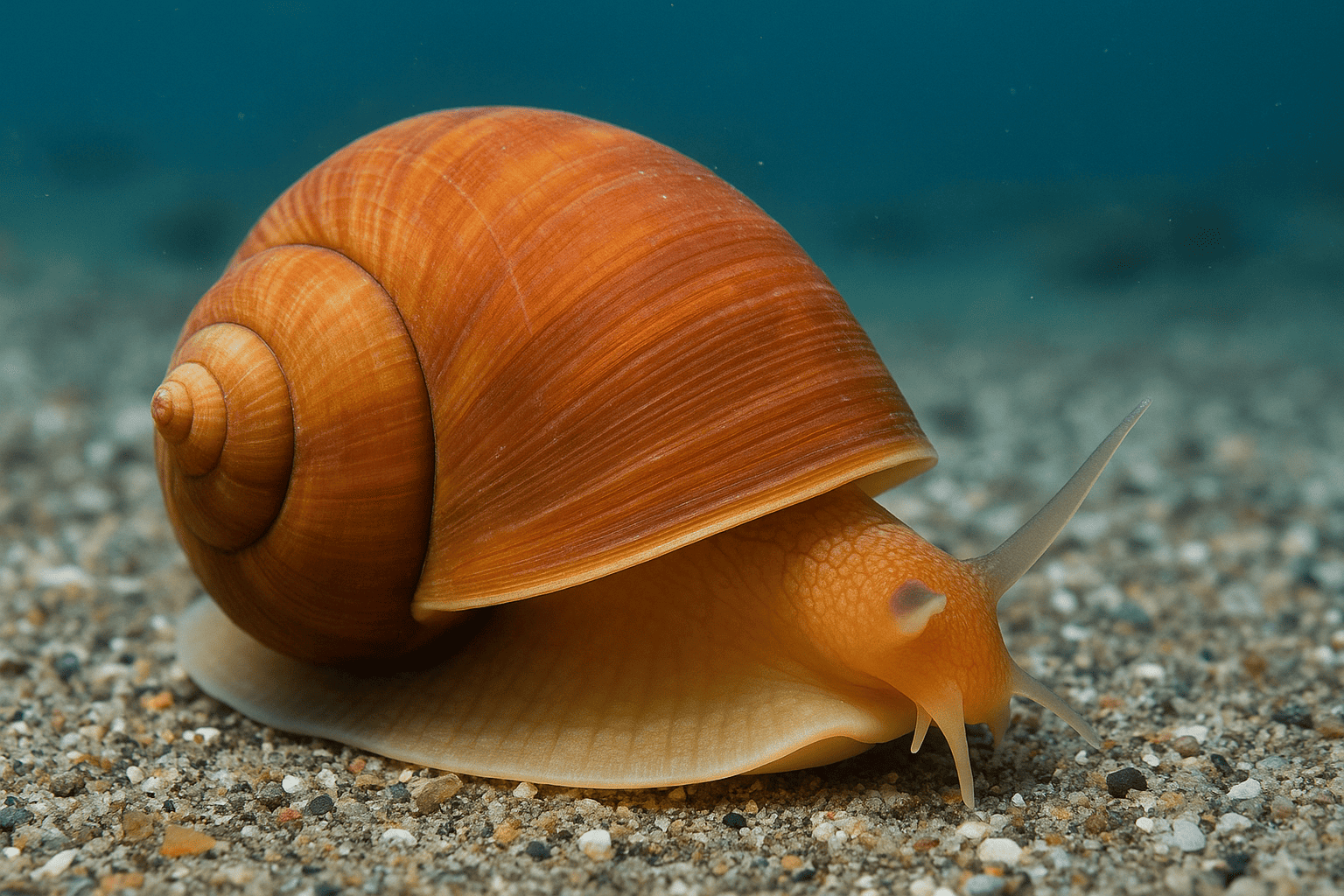
Sea snails may be small, but they play a surprisingly important role in shaping the underwater world. Found in oceans across the globe, these fascinating creatures carry their homes on their backs, glide gracefully along rocks and coral, and come in an astonishing variety of shapes, colors, and sizes. Whether you’ve admired a beautiful spiral shell on the beach or spotted a delicate marine snail clinging to a tide pool, sea snails are a reminder of how diverse and intricate ocean life can be. In this article, we explore what makes the ocean snail such an extraordinary animal and why these shelled wanderers continue to captivate scientists and sea lovers alike.
What Makes Sea Snails Unique?
Sea snails belong to a large group of mollusks with soft bodies protected by hard shells. These shells vary dramatically—some are long and pointed, others are round and smooth, and some have elaborate ridges or bold colors. When people think of a seashell snail, they often imagine the classic spiral shape found washed ashore, but the diversity goes far beyond the common household shell.
Many sea snails are grazers, feeding on algae, seaweed, or drifting organic material. Others are filter-feeders, gently sifting particles from the water. Then there are predatory snails, such as the well-known conch snail, which uses its long proboscis to hunt for food on the ocean floor.
Although sea snails move slowly, their ecosystems rely on them. They help maintain balance by controlling algae growth, serving as food for larger marine animals, and recycling nutrients through their feeding and burrowing habits. A snail in seashell may seem simple, but these creatures play vital roles in sustaining coral reefs, tide pools, and coastal habitats.
Sea Snails Around the World
Sea snails live almost everywhere—shallow beaches, deep trenches, coral reefs, kelp forests, and even hydrothermal vents. Their ability to adapt makes them one of the most widespread groups of ocean animals.
Beachcombers often find their empty shells long after the snail has moved on, offering glimpses into the beauty of the ocean’s smaller residents. Many of these shells become homes for other animals, such as hermit crabs, demonstrating how sea snails support life even after they’re gone.
Some species are tiny and delicate, while others grow surprisingly large. Many regions treasure their local snail species for their beauty and ecological importance. In some Asian and Pacific cultures, sea snails have historical significance as food sources and decorative materials.
Interestingly, one of the most whimsical sea creatures—the leaf sheep, a bright green sea slug that resembles a tiny sheep—shares similar habitats with sea snails, reminding us just how imaginative and colorful underwater life can be.
Why Sea Snails Matter
Sea snails do much more than decorate the shoreline with pretty shells. They contribute to the health of the ocean in several ways:
- Algae control: Many species graze on algae, preventing overgrowth that can smother coral reefs.
- Food chain support: They serve as prey for fish, crabs, sea stars, and even some birds.
- Habitat building: Their shells create micro-habitats for small marine organisms.
- Nutrient recycling: By feeding and burrowing, they help cycle essential nutrients within the ecosystem.
Because many sea snail species are sensitive to pollution and climate changes, scientists often use them to study the health of marine environments. Their decline in certain areas signals larger environmental issues, making them important indicators of ocean well-being.
Conclusion
Sea snails may not be fast-moving or fierce, but their quiet presence is essential to the balance of ocean ecosystems. From the colorful marine snail grazing on coral reefs to the sturdy conch snail roaming sandy seafloors, these animals contribute beauty, biological diversity, and ecological strength to the underwater world. Exploring their shells, habits, and habitats reveals just how interconnected ocean life truly is. And who knows—next time you find a spiraled shell along the shore, you may look at it with a deeper appreciation for the snail that once called it home.