
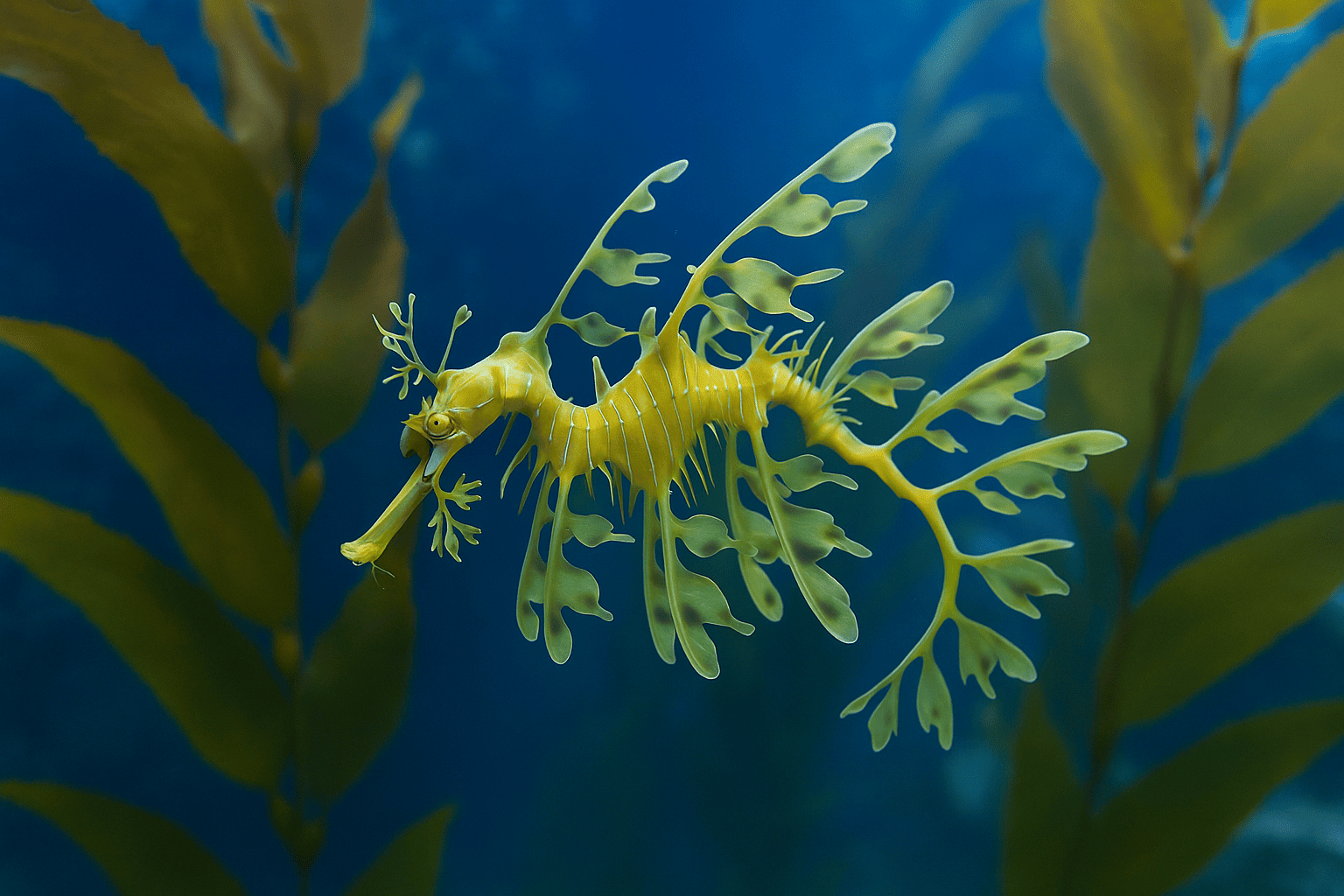
The leafy sea dragon is one of the ocean’s most mesmerizing creatures—a delicate, floating masterpiece that seems more like a mythical creation than a real animal. With its leaf-like appendages, gentle drifting movements, and extraordinary camouflage abilities, the leafy sea dragon captures the wonder of anyone who learns about it. As close relatives of seahorses, these creatures blend grace and mystery into a single shimmering form. This article introduces the beauty, behavior, and uniqueness of these astonishing animals while guiding readers into the magical world of leafy sea life.
Understanding the Leafy Sea Dragon
The leafy sea dragon (Phycodurus eques) is a marine fish native to the coastal waters of southern and western Australia. Known for its ornate appearance, the leafy sea dragon is covered in leaf-shaped protrusions, giving it a plant-like illusion that allows it to hide effortlessly among seaweed and kelp. This camouflage not only protects it from predators but makes it one of the most visually striking animals in the sea.
Closely related to seahorses and pipefish, the leafy sea dragon moves primarily by waving its small, transparent fins. These fins are almost invisible, giving the creature the appearance of drifting naturally with the currents. Its cousin, the leafy dragon seahorse, shares similar traits but lacks the elaborate leafy adornments that make the leafy sea dragon famous.
The leafy sea dragon is often compared to the common sea dragon, also known as the weedy sea dragon. While both share elegant body structures, the common sea dragon has fewer decorative appendages and a more streamlined look. Leafy seadragons, however, display a more ornate and dramatic silhouette that makes them a favorite among marine enthusiasts and divers.
Diet-wise, leafy sea dragons consume tiny crustaceans such as mysid shrimp. Their long, pipelike snouts allow them to suck in prey with precision. Although they look delicate, they are surprisingly skilled hunters.
Leafy sea dragons reproduce in a way similar to seahorses—males carry the eggs. The female deposits eggs onto a specialized brood patch on the male’s tail, where he fertilizes and nurtures them until they hatch. This unique reproductive method adds to their scientific fascination and ecological importance.
While exploring the world of leafy sea life, it’s worth noting that many other sea creatures exhibit surprising camouflage or stunning coloration. For example, the sea snail showcases an incredible diversity of shapes and shell patterns, offering another glimpse into the ocean’s artistic flair.
Why Leafy Sea Dragons Inspire Wonder
Leafy sea dragons are not just extraordinary because of their appearance—they symbolize the fragility and beauty of marine ecosystems. Their reliance on healthy kelp forests means their well-being is closely tied to environmental stability. Habitat loss and climate-related changes threaten their natural environment, making conservation awareness critical.
People are often captivated by leafy sea dragons because they seem almost unreal. Their slow, drifting motion evokes peace, while their intricate appearance encourages closer inspection. They have become ambassadors for marine conservation efforts, reminding us of how delicate and interconnected underwater life truly is.
Conclusion
The leafy sea dragon stands as one of the ocean’s most enchanting creatures—an underwater illusionist shaped by evolution into a living piece of art. From its slow drifting movements to its closely guarded reproductive habits, everything about this remarkable animal sparks curiosity and admiration. Whether you’re fascinated by marine biology or simply love unusual sea creatures, the leafy sea dragon offers a glimpse into the ocean’s most magical depths. And as you learn more about it—and other sea animals like the sea snail—it becomes clear how important it is to protect the environments these delicate species call home.