
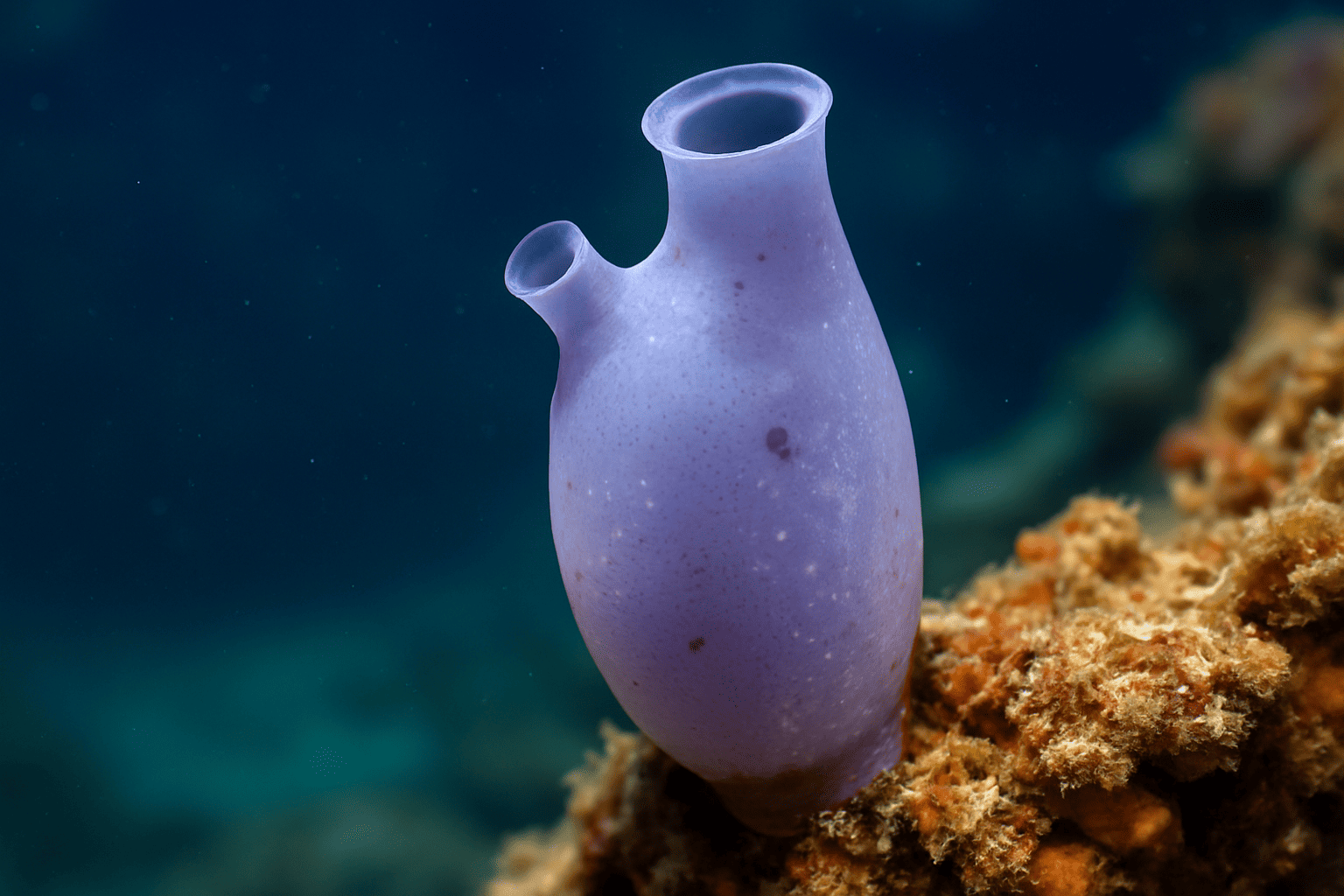
The sea squirt may not be the flashiest creature in the ocean, but it is certainly one of the most fascinating. Often overlooked due to its simple appearance, this odd marine animal hides an unexpected level of biological complexity. From its unusual life cycle to its unique role in ocean ecosystems, the sea squirt animal is full of surprises. Whether you’ve seen them attached to rocks, piers, or coral reefs, these soft-bodied filter feeders play an essential part in maintaining healthy marine environments and deserve a closer look.
What Makes the Sea Squirt Unique
The sea squirt belongs to a group of animals known as tunicates—creatures that begin life in a larval form resembling a tadpole, complete with a simple nerve cord. In this phase, the organism moves freely through the water. However, once it finds a surface to settle on, the sea squirt undergoes a dramatic transformation. It absorbs most of its own nervous system and becomes a stationary filter feeder.
This life cycle is one reason scientists find the sea squirt so intriguing. Despite its simple adult form, it is more closely related to vertebrates than many would expect. Its larval stage even shares characteristics with early chordates, making it an important species for evolutionary biology.
Among the many varieties, the skeleton panda sea squirt stands out for its striking appearance. Often referred to as the sea skeleton panda or panda sea squirt, this species is known for its black-and-white pattern that resembles the face of a panda. Though small in size, it has captured the fascination of divers and marine enthusiasts worldwide.
Sea squirts can be found in oceans around the globe, usually in clusters attached to rocks, ship hulls, reefs, or other hard surfaces. As filter feeders, they help maintain ocean health by drawing in water, trapping microorganisms, and expelling clean water back into the environment. This makes them quiet but powerful contributors to marine ecosystems.
Sea squirts also connect the ocean’s food web. Some marine creatures feed on them, while others use clusters of squirts as hiding places or protective structures. Their presence adds texture and life to underwater habitats, and they are often found near other unique species. For example, it’s not uncommon to spot a leafy sea dragon drifting gracefully nearby, using its elaborate camouflage to blend into seaweed-covered areas where sea squirts often thrive.
Types of sea squirts vary widely, and though some are small and solitary, others grow in colonies that form bright, colorful patches of orange, red, purple, or green. These colonies add vibrancy to underwater landscapes and support a surprising amount of surrounding marine life.
Types of Sea Squirts
Here are a few notable types and categories related to sea squirts:
- Sea squ – A short nickname sometimes used informally for sea squirts
- Sea squirt animal – The general term for tunicates of this type
- Skeleton panda sea squirt – A visually striking species with panda-like markings
- Sea skeleton panda – Another name for the same species
- Panda sea squirt – Yet another variant of the name
Whether plain or colorful, solitary or colonial, sea squirts each serve a purpose in their ecosystem.
A Small but Significant Ocean Resident
While the sea squirt may not look impressive at first glance, its biology and ecological impact tell a different story. From its chordate-like larval stage to its role as a filter feeder, the sea squirt plays an essential part in maintaining the ocean’s delicate balance. Species like the panda sea squirt remind us of the incredible diversity and creativity of marine life.
As you continue exploring the animals of the sea—whether it’s the camouflaged majesty of the leafy sea dragon or the humble sea squirt—each creature offers its own story, evolutionary quirks, and contribution to our planet’s underwater world.