If you’ve ever wondered what kind of creatures drift beneath the waves with colors as vivid as gemstones, the blue dragon sea slug is one of the ocean’s most mesmerizing surprises. This tiny yet fierce marine wanderer seems almost mythical at first glance—brilliantly colored, delicately shaped, and floating upside down on the surface of warm ocean waters. In this article, we’ll explore what makes the blue dragon slug so extraordinary, from its biology to its survival strategies, while introducing you to related sea life like the humble sea squirt, another intriguing member of the ocean’s diverse ecosystem.
What Is the Blue Dragon Sea Slug?
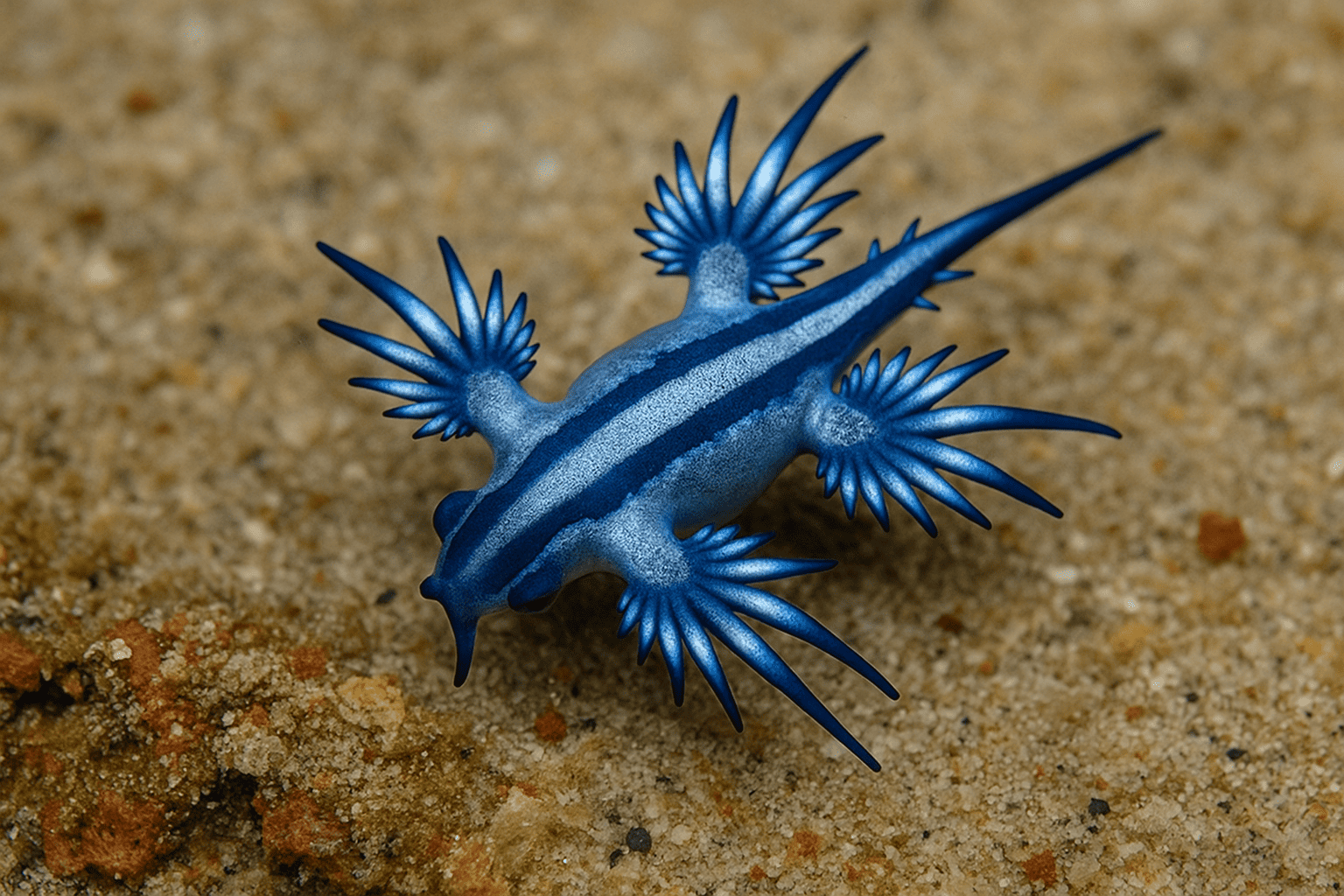
The blue dragon sea slug, scientifically known as Glaucus atlanticus, is a small species of pelagic nudibranch that lives at the ocean’s surface. Despite its delicate, almost otherworldly appearance, this creature is a powerful predator in its miniature world. Its body showcases vibrant shades of silver, cobalt, and deep blue—colors that provide both camouflage and danger signals as it drifts along ocean currents.
This species is often called the blue dragon of the sea, and the name fits perfectly. With wing-like cerata fanning out from its body and a sleek, elongated shape, it resembles a tiny dragon gliding across the waves. While many nudibranchs crawl along reefs and rocks, Glaucus atlanticus floats upside down, carried by the wind, waves, and surface tension of the water.
Body Structure and Survival Adaptations
The blue dragon mollusk may be small—typically only about three centimeters long—but it is equipped with remarkable adaptations. Its bright underside faces upward toward the sun, blending with the water’s surface, while its darker blue side faces downward, camouflaging it from predators below. This countershading makes it difficult for both prey and predators to detect it.
One of the blue dragon’s most impressive abilities is its capacity to store stinging cells, called nematocysts, from the venomous animals it consumes. Its favorite prey includes the Portuguese man o’ war and other siphonophores. Instead of being harmed by their painful stings, it repurposes the toxins within specialized sacs in its own cerata. As a result, the blue dragon slug can deliver a sting even more intense than the creature it fed on.
This slug’s diet and drifting lifestyle place it near many other fascinating sea organisms—some dangerous, some harmless. Among these gentler neighbors is the sea squirt, a filter-feeding marine invertebrate whose simple structure contrasts sharply with the blue dragon’s dramatic form and bold survival strategies. Together, they demonstrate just how diverse life in ocean ecosystems can be.
Behavior, Habitat, and Life Cycle
The blue dragon sea slug is found in warm ocean waters worldwide, particularly in the Atlantic, Pacific, and Indian Oceans. Because it floats at the surface, it often appears washed ashore after storms, surprising beachgoers who are drawn to its vivid colors.
Despite its graceful look, the blue dragon is a voracious feeder. It uses its sharp jaws to consume prey much larger than itself. Groups of blue dragons sometimes drift together, forming temporary aggregations as they feed within the same current lines.
Reproduction is equally fascinating. As hermaphrodites, blue dragons carry both male and female reproductive organs, allowing any two individuals to mate. After mating, they deposit strings of eggs on drifting debris, including logs, shells, or the remains of prey animals. When the eggs hatch, tiny larvae begin life floating before maturing into fully formed dragons of the sea.
Conclusion
The blue dragon sea slug is one of the ocean’s most extraordinary creatures—beautiful, dangerous, and unlike anything else in the marine world. From its shimmering colors to its ability to weaponize the stinging cells of its prey, this tiny nudibranch showcases the ingenuity and wonder found in nature’s design. Whether admired drifting at the water’s surface or studied for its unique biological traits, the blue dragon slug remains a symbol of the ocean’s mysterious and dazzling beauty. As we explore ocean life—from fierce predators to gentle filter feeders like the sea squirt—we uncover a world that continues to inspire awe, curiosity, and respect for the seas that shape our planet.