
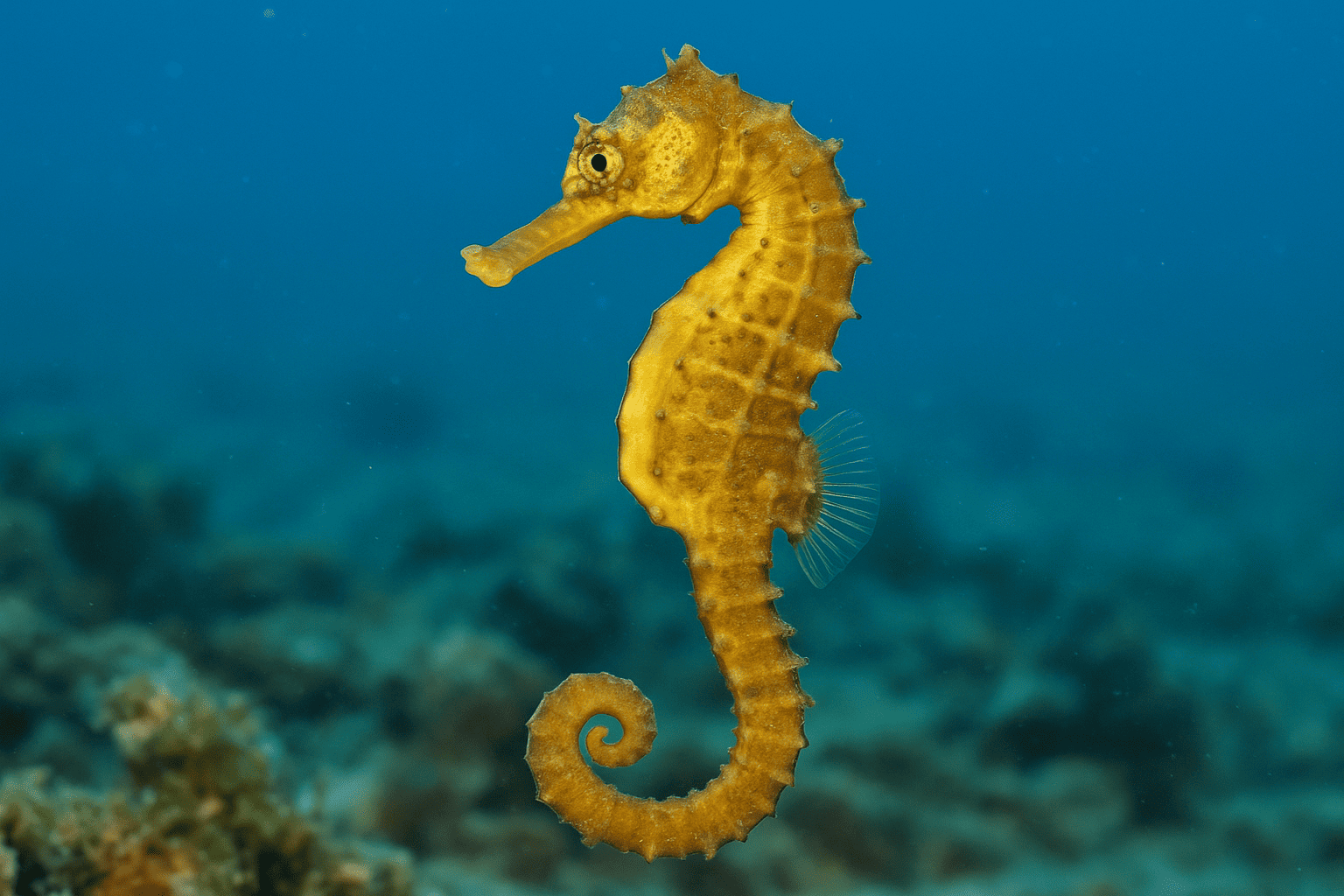
Seahorses are some of the most enchanting animals in the ocean, with curved necks, bony armor, and delicate fins that flutter like wings. Despite their fragile appearance, each seahorse is a skilled hunter, using a long snout to vacuum tiny shrimp and plankton from the water. These fish prefer calm, sheltered habitats such as seagrass beds, coral reefs, and mangrove roots, where they can anchor themselves with their prehensile tails. From the tiniest pygmy species to the spectacular dragon seahorse relatives, they captivate divers and scientists alike and reveal how diverse ocean life can be.
What Makes Seahorses So Special?
Unlike most fish, seahorses swim upright, moving slowly and relying on camouflage rather than speed. Their bodies are covered in hard plates instead of scales, giving them a distinctive, armored look. Many species blend perfectly with seaweed or coral, allowing a leafy sea horse to vanish among fronds or sponges. The famous leafy dragon seahorse and weedy seahorse, close cousins of true seahorse s, take this disguise even further with ornate fins that resemble drifting plants. These adaptations help them avoid predators and sneak up on prey in busy coastal habitats.
One of the most remarkable traits of seahorses is their unusual approach to parenting. In a role reversal rare in nature, it is the male that becomes pregnant. Females deposit eggs into a special pouch on the male’s belly, where he fertilizes them and provides oxygen and nutrients as the embryos develop. After several weeks, the male gives birth to fully formed miniature seahorses, ready to fend for themselves. This strategy allows parents to invest heavily in each brood and may increase the chances of survival in environments where danger is constant.
Seahorses depend on healthy, complex habitats to survive. They are most often found clinging to seagrasses, kelp, sponges, or coral branches, where they can hunt plankton and tiny crustaceans drifting by on gentle currents. When these habitats are destroyed by dredging, pollution, or climate-driven heat waves, local seahorse populations often decline quickly. Because they are relatively easy to spot and closely tied to particular habitats, scientists use them as indicators of ecosystem health, much as paleontologists once used fossils like the ancient Archelon turtle to understand long-vanished seas.
Unfortunately, many seahorse species are now under threat from overfishing and habitat loss. Millions are caught each year as accidental bycatch in trawl nets or collected deliberately for use in traditional medicines, curios, and the aquarium trade. Their slow, careful swimming style makes it hard for them to escape from fast-moving nets or sudden changes in their environment. International agreements now regulate much of the trade, but enforcement can be difficult, and local protections vary widely from one region to another.
Researchers and conservation groups are working to change this. Marine protected areas that safeguard seagrass beds and coral reefs can provide safe havens for seahorses and many other creatures. Community-based fishing rules, such as bans on destructive trawling in shallow coastal waters, also help. In some regions, divers and snorkelers contribute by sharing photos and sighting records, allowing scientists to track populations over time. Sustainable aquaculture projects may reduce pressure on wild stocks by providing responsibly bred seahorses for the aquarium trade instead of capturing them from reefs.
Why Seahorses Matter
Seahorses may be small, but they play an important role in coastal ecosystems. As predators of tiny crustaceans, they help balance food webs, while their need for healthy seagrass and coral makes them powerful symbols for habitat protection. Their unusual parenting, graceful movements, and close relatives like the dragon seahorse and leafy sea horse inspire curiosity about ocean life among children and adults alike. By supporting marine protected areas, reducing plastic use, and choosing sustainable seafood, we help create oceans where seahorses can thrive. Protecting them means protecting the intricate underwater neighborhoods that support countless other species, including some of our most beloved sea animals.