The leatherback sea turtle is one of the most extraordinary creatures to grace our oceans. Known for its impressive size, remarkable migrations, and ancient lineage, this gentle giant has fascinated marine biologists and nature lovers alike. Unlike other sea turtles, the leatherback’s soft, flexible shell sets it apart, making it both unique and perfectly adapted for deep-sea exploration. Whether you call it a leatherback turtle, baula turtle, or simply one of the world’s giant sea turtles, its story is one of endurance, evolution, and mystery.
Understanding the Leatherback’s Unique Adaptations
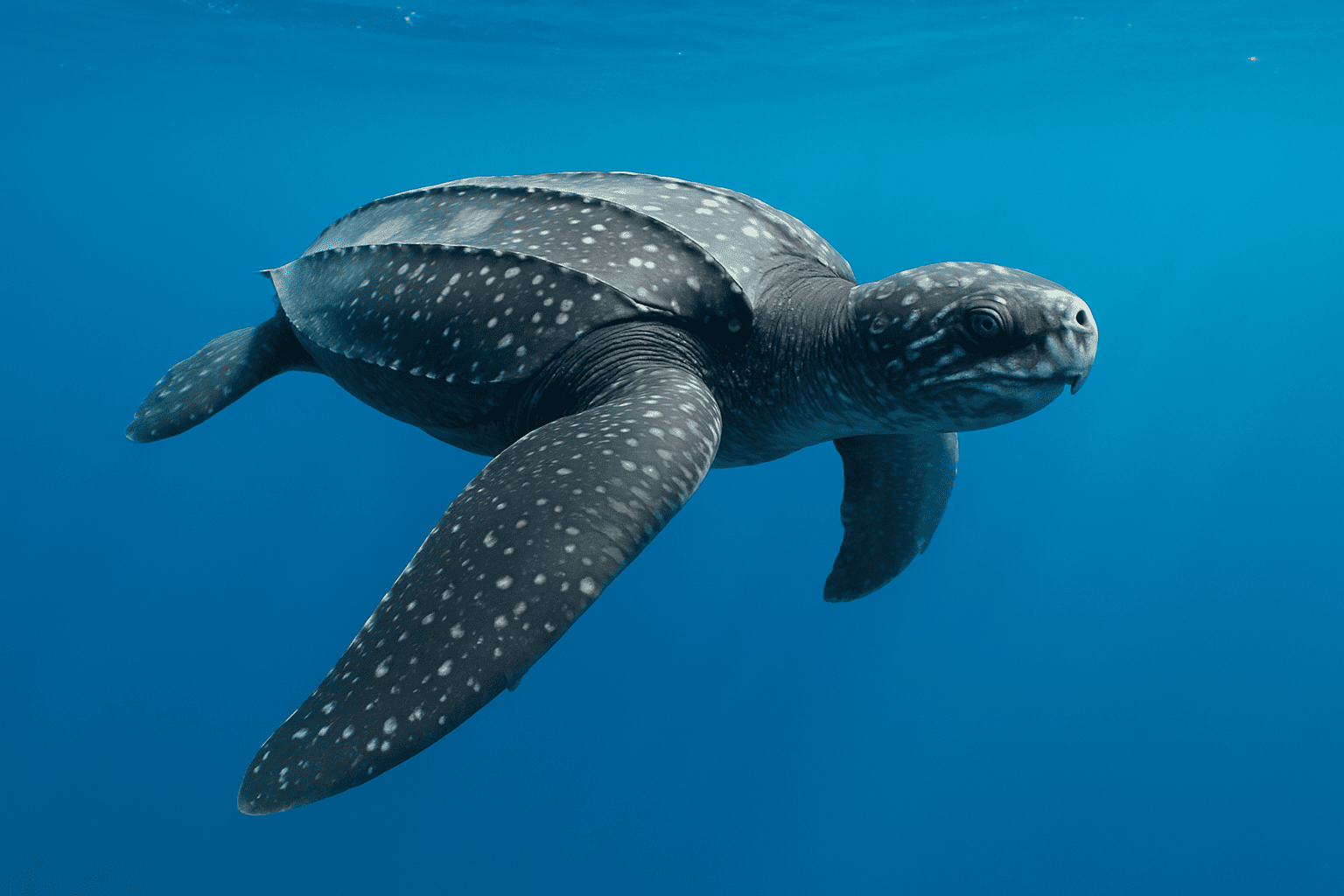
As the largest turtle species on Earth, the leatherback is a true marvel. Its soft, leathery shell allows it to withstand massive ocean pressure as it dives thousands of feet below the surface. This flexibility also helps streamline its body, enabling powerful, efficient swimming across entire oceans. The incredible leatherback sea turtle may weigh over 1,000 pounds, a number that demonstrates the impressive leatherback turtle size compared to other marine reptiles.
Leatherbacks are expert navigators, following ancient migratory routes that lead them from tropical nesting beaches to colder waters rich in jellyfish. Their long flippers, the longest of any sea turtle relative to body size, help them glide gracefully through the deep blue.
Their diet consists primarily of soft-bodied animals like jellyfish, which plays a crucial ecological role in balancing ocean populations. These gentle giants help keep jellyfish numbers in check, maintaining stability in marine ecosystems.
Life Cycle and Behavior of the Leatherback
Leatherbacks have one of the most remarkable life cycles in the ocean. Females return to the beaches where they were born, sometimes traveling thousands of miles to nest. Their nesting rituals involve digging deep pits in the sand to protect their eggs from predators and rising tides. After laying dozens of eggs, they return to the sea, leaving the hatchlings to rely solely on instinct.
Newly hatched leatherbacks rush toward the surf, beginning a journey of survival that will challenge them from the start. Only a fraction reach adulthood, but those that do may live for decades, exploring the vastness of the open ocean.
Their calm and gentle nature inspires awe, and despite their great size, leatherbacks pose no threat to humans. Instead, they serve as reminders of the fragile beauty of marine life.
The Leatherback’s Place Among Other Sea Creatures
In the world of sea animals, leatherbacks hold a special place due to their size and ancient history. Their impressive presence contrasts beautifully with more delicate species, such as the dragon seahorse, a small and intricate marine creature known for its graceful movements. While the dragon seahorse lives among reefs and seagrass, the leather back sea turtle roams wide-open waters, showing just how diverse ocean life can be.
Understanding the leatherback’s role in marine ecosystems offers a deeper appreciation for conservation efforts. Protecting nesting beaches, reducing plastic pollution, and preserving feeding grounds are crucial steps in ensuring their continued survival.
Conclusion
The leatherback sea turtle stands as one of the ocean’s most iconic and irreplaceable species. Its unique body design, impressive strength, and gentle nature make it a symbol of both resilience and vulnerability in the natural world. From the warm sands where hatchlings begin their journey to the deep, cold waters where adults roam, the leatherback’s life cycle is nothing short of extraordinary. As the largest of the giant sea turtles, it reminds us of the importance of protecting the oceans they call home. And by learning about their neighbors, like the delicate dragon seahorse, we gain an even richer understanding of the vibrant, interconnected marine world.